Packaging changes are often treated as a necessary headache. A market changes, regulations differ, languages need updating, or a product that was originally prepared for one territory suddenly needs to work in another. In theory, the solution sounds simple, just change the pack. However, in practice, it is rarely that straightforward.
For many brands, especially those working across multiple regions, packaging is a significant investment. Preprinted pouches, cartons and flexible films are often produced in volume, ordered well in advance, and designed to support efficient production runs. When something changes after that packaging has already been printed, businesses can find themselves facing the frustrating choice of writing off perfectly usable stock and starting again, or finding a smarter way to adapt.
This is exactly where overlabelling comes into its own.
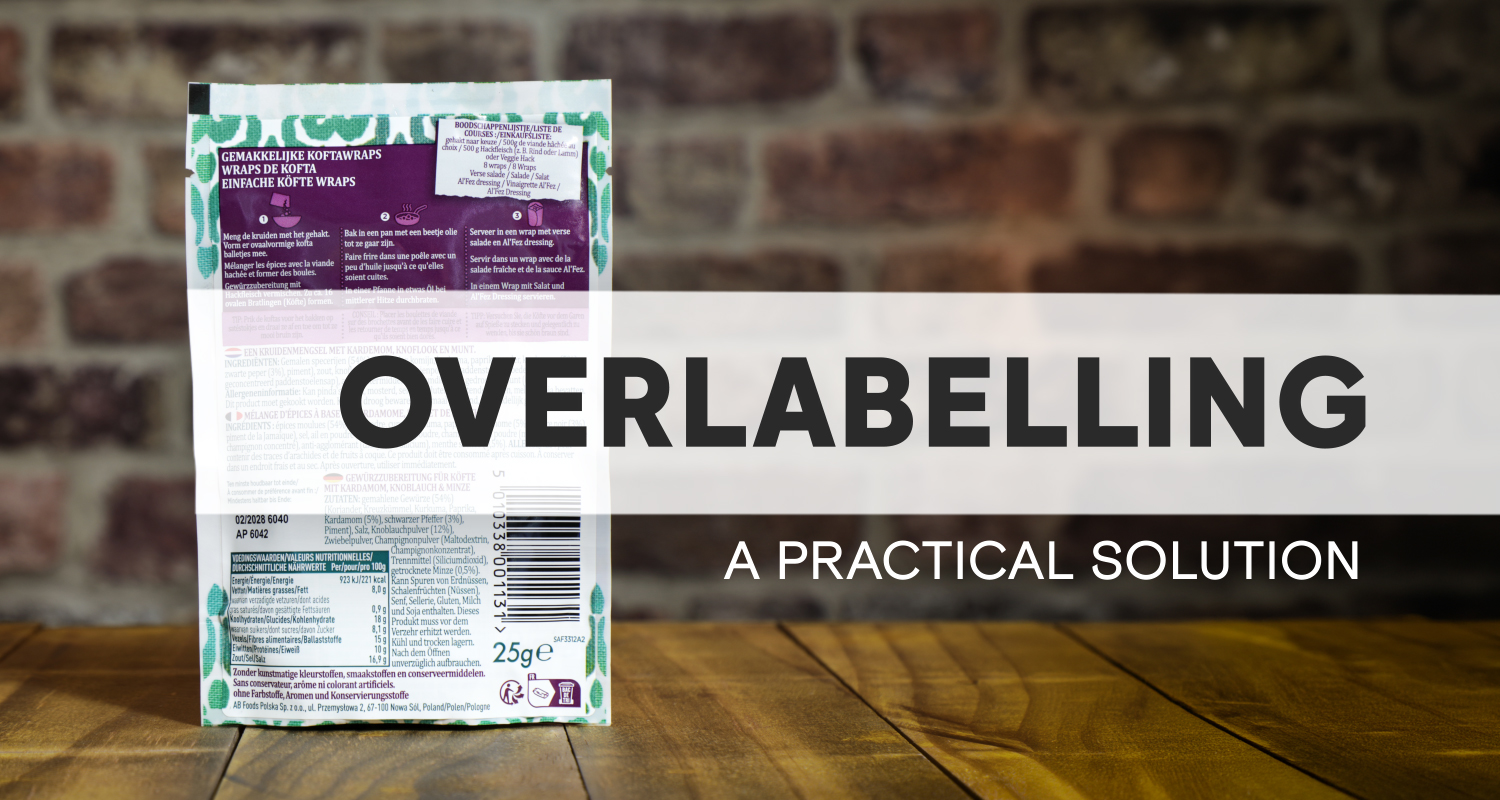
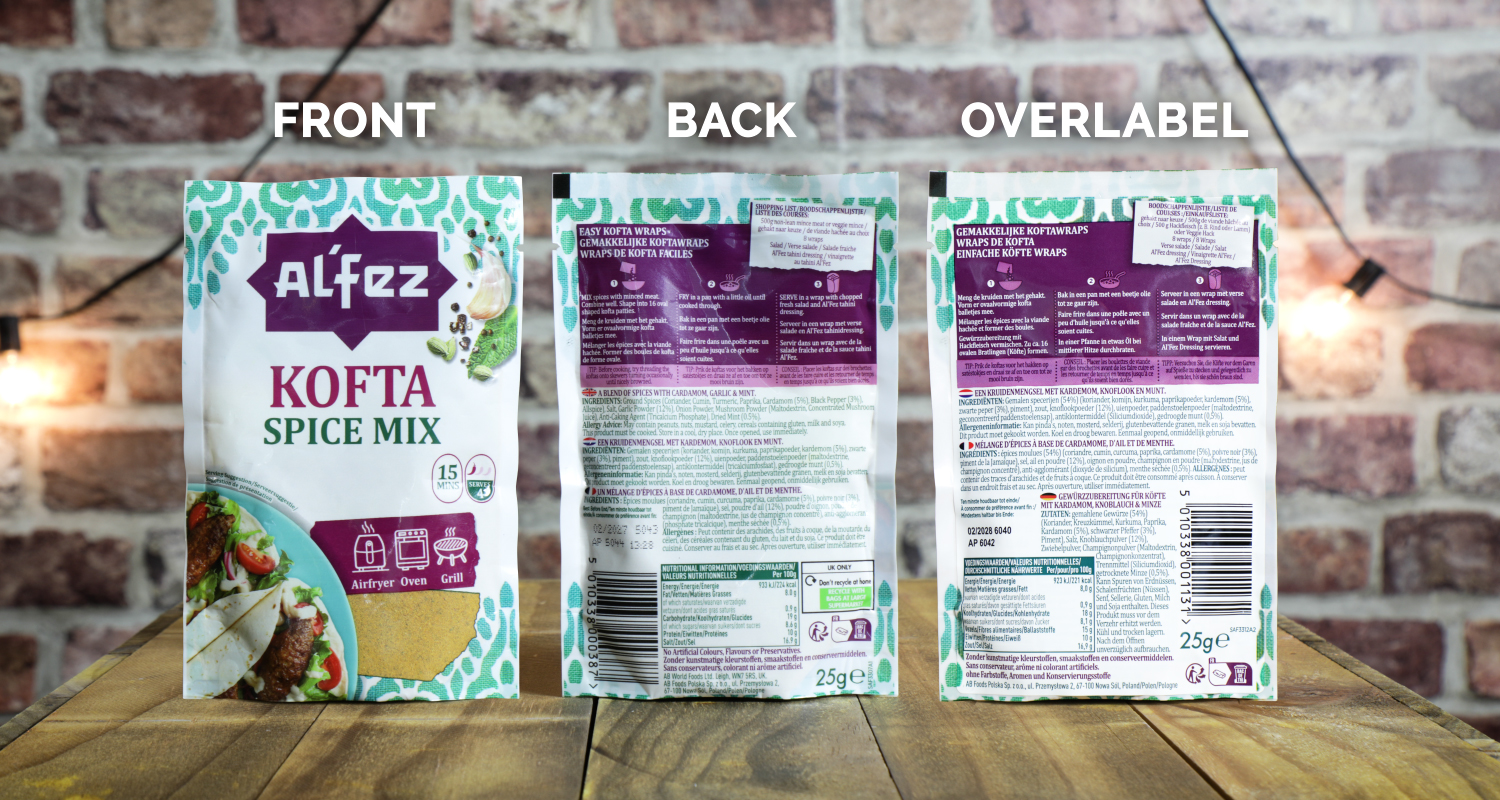
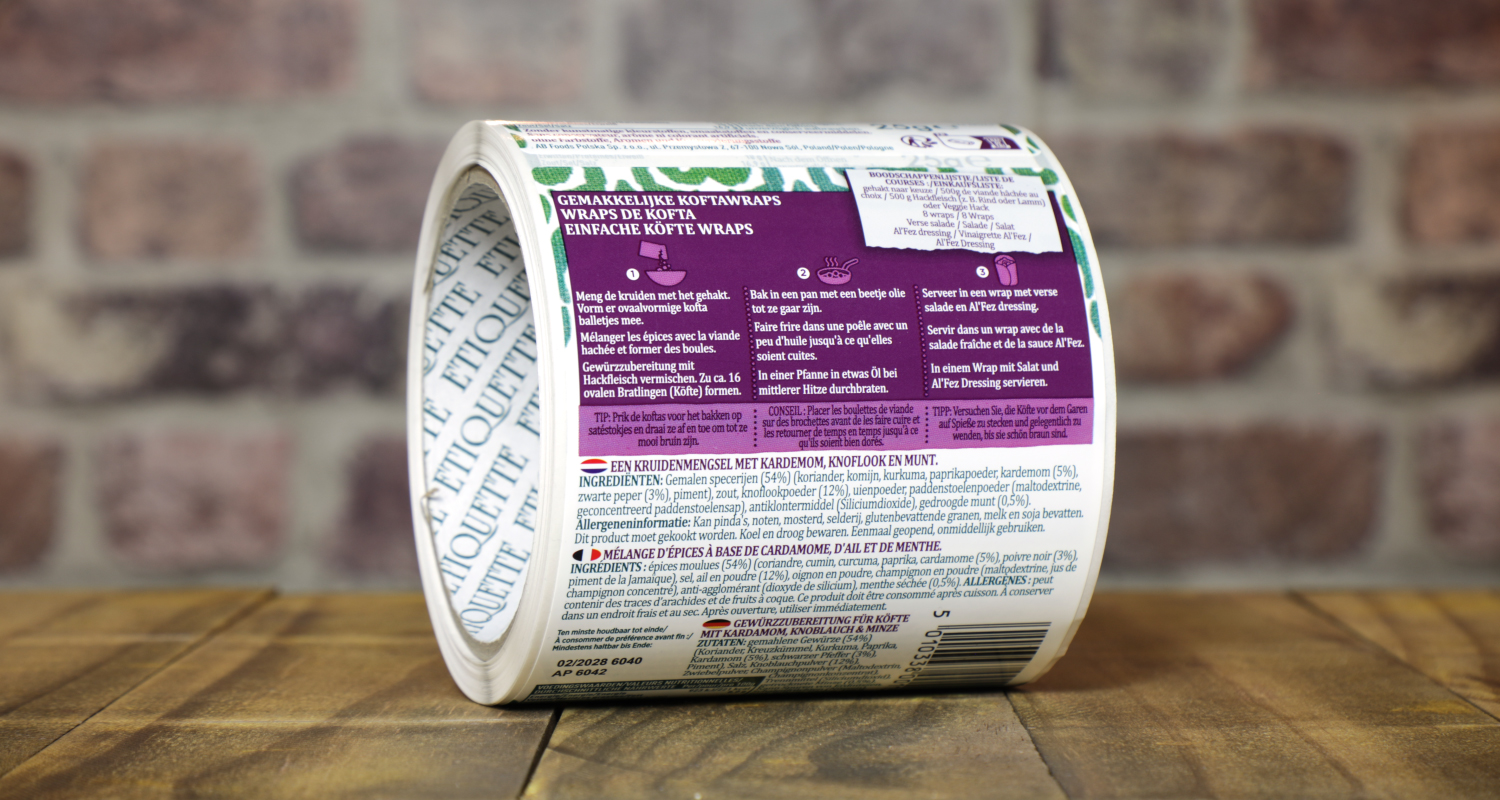
In the example shown here, preprinted pouch packaging was originally produced in one format, but later needed to be adapted for European markets. Rather than discard existing stock or go through the cost and delay of re-originating the packaging completely, the customer chose a far more efficient route. A carefully designed overlabel was produced to sit over part of the existing pack, matching the original visual style while updating the required information for a different market, including language changes and market-specific copy.
It is a practical solution, but more than that, it is a commercially intelligent one.
Overlabelling allows businesses to respond quickly when packaging requirements shift. That might be due to export opportunities, multilingual compliance, retailer-specific requirements, revised legal text, ingredient changes, promotional messaging, or artwork amends that arise after the main packaging has already been manufactured. Instead of treating existing stock as wasted inventory, overlabelling makes it usable again. In many cases, that can save substantial cost, reduce lead times, and avoid disruption to supply.
There is also a sustainability benefit that should not be overlooked. Throwing away printed packaging because part of the information is no longer correct is expensive, but it is also wasteful. If the structure, branding and overall pack are still fit for purpose, then applying a high-quality label over the relevant panel can extend the life of that packaging in a responsible and efficient way. In an industry that is under increasing pressure to reduce unnecessary waste, overlabelling can be a very sensible answer.
The key, of course, is doing it properly.
An overlabel should not look like an afterthought. It needs to integrate cleanly with the original design, sit accurately on pack, and deliver the required information clearly and professionally. When done well, it preserves brand presentation while solving a technical or commercial problem in the background. In this case, the overlabel was produced in a style that worked with the original pouch design, ensuring the updated pack still looked cohesive on shelf while carrying the correct information for the intended European audience.
That is an important point, because packaging still has a job to do beyond compliance. It needs to reassure the customer, maintain brand consistency, and look credible in a retail environment. A poorly considered overlabelling job can undermine the product. A well-executed one can achieve the opposite and allows brands to move quickly and adapt without sacrificing presentation.
In many ways, overlabelling is one of those solutions that proves good packaging is not just about print quality or shelf appeal. It is also about flexibility, problem-solving and understanding the realities of production. Sometimes the smartest packaging decision is not to start again, but to adapt what already exists in a way that is efficient, compliant and commercially sound.
For brands navigating product updates, regional variations or export opportunities, overlabelling offers a route that is both pragmatic and professional. It protects stock, reduces waste, saves cost, and helps products move into the right market with the right information on pack.
When handled well, it is not a compromise. It is simply smart packaging.
If you’d like to find out more about how Etiquette can help with your labelling requirements, contact us now.